Introduction: A New Definition of Hospitality Luxury
A memorable hotel is not defined by a beautiful photograph alone. Guests notice whether a lounge chair supports a relaxed conversation, whether a bedside table is easy to reach, and whether the lobby feels welcoming after a long journey. Furniture quietly shapes all of these moments. As hospitality brands plan for 2027, the strongest design direction is a balance of expressive aesthetics, everyday usability and long-term value. The following eight trends are forward-looking design directions, not guaranteed industry outcomes. They offer practical inspiration for hotel owners, resort developers, architects and procurement teams looking to create spaces that feel distinctive and perform well under daily use.
1. Sculptural Seating with Soft, Organic Shapes
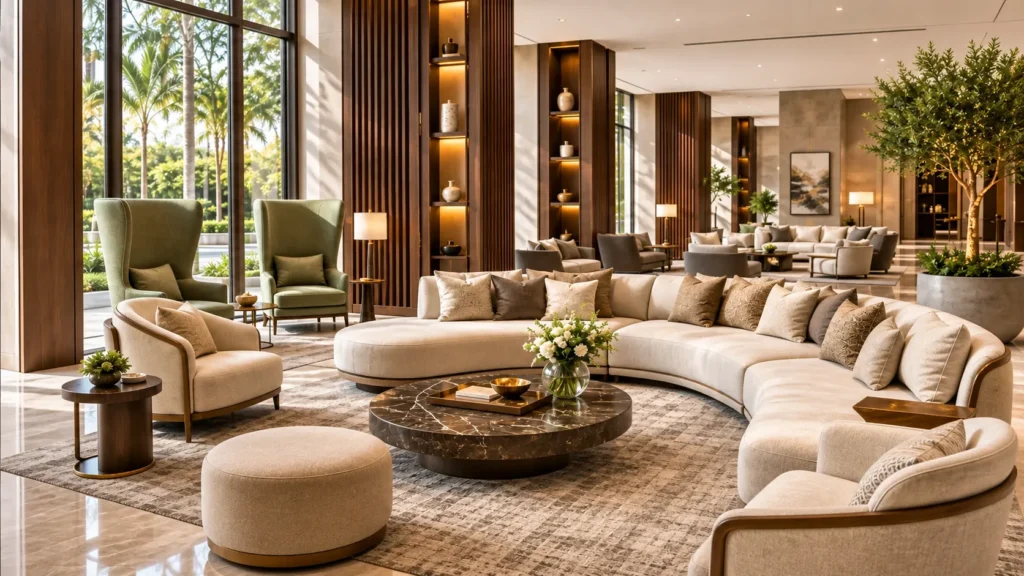
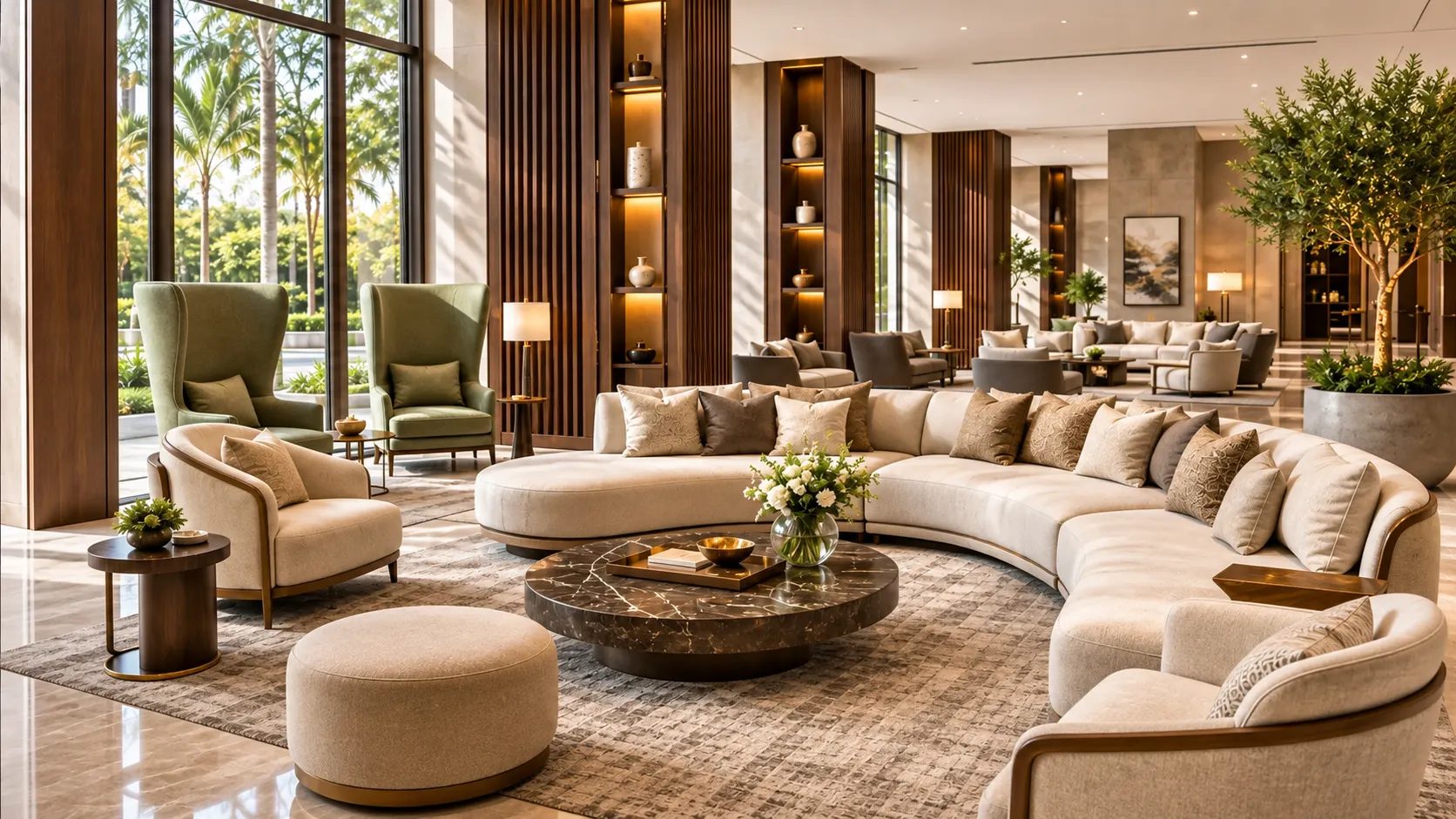
Curved sofas, rounded lounge chairs and gently contoured benches are bringing a more approachable character to hospitality interiors. Their flowing silhouettes can soften large lobbies and make seating clusters feel conversational rather than formal. A sculptural piece works best when its shape supports comfortable posture and easy access, not simply when it looks striking.
How to use it
For example, a boutique hotel could place a curved cream sofa opposite two upholstered armchairs around a low table. Keep generous circulation space and test seat depth, firmness and entry height with different guest needs in mind. Choose commercial-grade construction and fabrics appropriate to expected traffic.
2. Warm Neutrals, Rich Browns and Refined Metallic Details
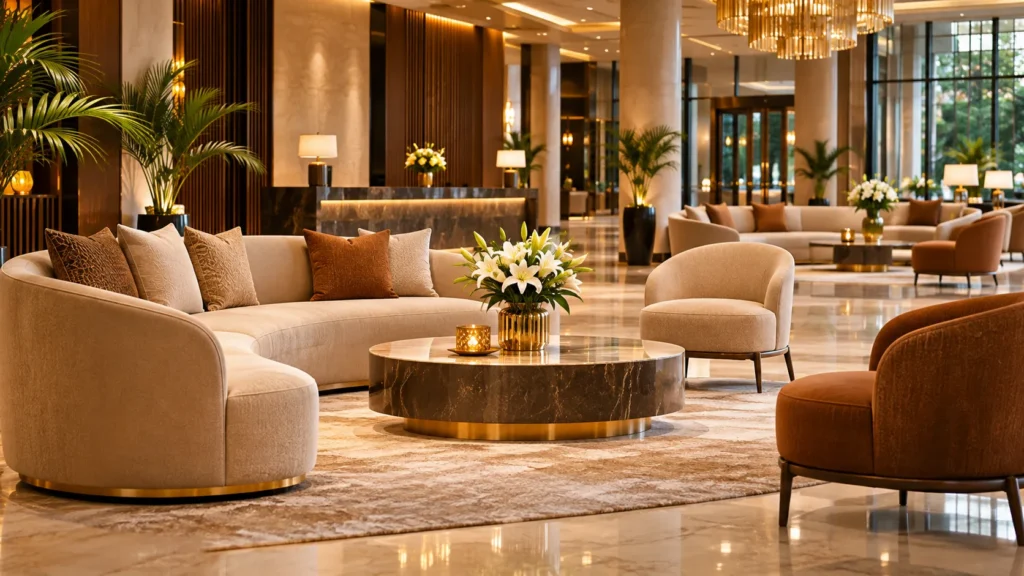
Cool, stark interiors are giving way to layered palettes of ivory, sand, caramel, walnut and chocolate brown. Brushed brass or muted gold can add a subtle sense of occasion without overwhelming a room. The result is a palette that photographs beautifully yet feels calm in person. Variation in texture is essential: woven upholstery, matte wood grain and softly veined stone prevent neutral spaces from appearing flat.
How to use it
In a resort reception lounge, pair walnut side tables with taupe seating, cream upholstery and small brass details. Use gold selectively on legs, lighting or hardware rather than across every surface. Confirm that material finishes remain consistent under both daylight and evening illumination.
3. Custom Furniture That Expresses a Property’s Identity
Guests increasingly encounter hotels through images before arriving. Distinctive furniture can help a property communicate its personality at a glance, but the most effective custom pieces also solve operational problems. Bespoke headboards, banquettes, reception seating and lounge tables can be proportioned to the architecture, guest profile and brand story. Customization should include dimensions, finishes, upholstery, cleaning access and replacement-part planning—not color selection alone.
How to use it
A coastal hotel might specify low-profile lounge seating with natural-looking finishes, while an urban business hotel may prefer upright chairs and integrated charging access. Before production, review samples, mock-ups and shop drawings with design and operations teams.
4. Flexible Furniture for Multi-Use Public Spaces
Hotel lobbies are increasingly expected to support several activities: quick meetings, remote work, informal dining, waiting and socializing. Furniture arrangements should adapt without making the space feel temporary. Lightweight occasional chairs, modular seating and movable tables can help staff adjust a zone for different times of day. Flexibility is most successful when power access, acoustics, cleaning and circulation are planned alongside the furniture.
How to use it
Consider a business hotel that offers a quiet morning work zone and a relaxed evening social area. Use modular seating to shift group sizes, while keeping accessible routes and stable table heights. Avoid placing mobile furniture where it blocks exits or service paths.
5. Sustainability Through Durability and Repairability
Sustainable hospitality furniture is about more than a green label. Longevity, repairable components, responsibly sourced materials and practical maintenance can reduce unnecessary replacement. Buyers should ask suppliers for evidence behind environmental claims, including relevant material documentation and finish information. A piece that is beautiful but difficult to clean or repair may create avoidable costs over its service life.
How to use it
For a high-occupancy property, compare replaceable seat cushions, removable upholstery options and sturdy frames before selecting lounge chairs. Evaluate the expected maintenance schedule and total ownership cost, not only the purchase price. Ask how damaged components can be repaired or replaced.
6. Tactile Materials and Layered Comfort
Luxury is increasingly communicated through touch as much as appearance. Textured weaves, soft upholstery, warm wood and carefully selected leather alternatives can make public areas feel residential and inviting. Yet tactile appeal must be balanced with stain resistance, cleaning requirements, fire-safety specifications and the needs of the setting. A fabric suitable for a private suite may not be appropriate for a busy restaurant.
How to use it
Create a layered lounge with a textured sofa, smooth timber tables and upholstered accent chairs. Request physical swatches and test them under realistic lighting. For high-use areas, prioritize performance specifications and confirm applicable local safety requirements.
7. Biophilic Furniture Pairings and Nature-Inspired Design
Hospitality spaces are embracing a closer connection to nature through wood tones, organic silhouettes, greenery and daylight. Furniture can reinforce this feeling without relying on an overly literal theme. Low seating near windows, natural-looking materials and comfortable viewing angles help guests enjoy the surroundings. The aim is to create a sense of calm while protecting furniture from direct sunlight, humidity and wear where relevant.
How to use it
A garden-facing resort lounge could combine timber-framed chairs, linen-look upholstery and rounded tables. Select finishes suited to the property’s climate, especially near open terraces or large glazed areas, and ensure plant placement does not obstruct circulation.
8. Quiet Technology Integration
Guests value convenient access to power and connected services, but visible cables and bulky fittings can interrupt an elegant interior. Thoughtful furniture design can incorporate discreet power outlets, cable management and practical work surfaces. Technology choices should remain serviceable as standards and guest habits change. Not every chair needs a charging port; the goal is convenience where it genuinely supports use.
How to use it
In a premium hotel lobby, locate charging points near selected side tables and work-friendly seats. Coordinate power requirements early with the electrical and interiors teams, and make sure components can be maintained without replacing an entire furniture piece.
How Hotels Can Apply These Trends Without Overdesigning
The most effective 2027 furniture strategy starts with the property’s audience, service model and budget. First, map how guests actually use each space. Next, define a consistent material and color palette that supports the brand. Select one or two distinctive statement pieces, then build around durable, comfortable essentials. Test furniture samples for scale, ergonomics and maintenance. Finally, evaluate cost across the expected life of the furniture, including cleaning, repairs and possible replacement. A coordinated procurement plan often delivers more value than following every trend at once.
A Practical Procurement Checklist
Before placing an order, confirm the intended use of each piece, expected daily traffic, dimensions, accessibility considerations, upholstery and finish performance, cleaning instructions, lead times, installation requirements, warranty terms and availability of replacement parts. Ask for material samples and approval drawings where appropriate. For commercial spaces, verify applicable fire and safety requirements with qualified project professionals.
Frequently Asked Questions
What is the biggest hospitality furniture trend for 2027?
There is no single trend that fits every property. A notable direction is the combination of softer sculptural forms, warm materials and flexible, comfortable layouts. The right choice depends on guest expectations and operational needs.
Is custom hotel furniture worth the investment?
Custom furniture can be valuable when it solves a specific space, branding or functional requirement. Compare the benefits against lead time, minimum quantities, maintenance and replacement needs before committing.
Which materials work best for high-traffic hotel areas?
Look for commercially suitable frames, finishes and upholstery with documented performance for the intended application. Evaluate cleanability, repairability and local safety requirements rather than relying on appearance alone.
How can a hotel make its lobby feel more luxurious?
Start with comfortable seating groups, clear circulation, layered lighting and a cohesive palette. A well-proportioned statement sofa or bespoke reception feature can add personality without crowding the room.
Are sustainable furniture options always more expensive?
Not necessarily. Initial prices vary, and long-lasting, repairable furniture may offer better value over time. Compare total ownership costs and request evidence for sustainability claims.
How early should furniture planning begin?
Begin during the design and space-planning stage, before layouts and service points are finalized. Early coordination helps align dimensions, power, finishes, accessibility and procurement schedules.
Bring Your Hospitality Vision to Life with Furnivaa
The furniture guests remember is the furniture that makes them feel at home while reflecting the character of the destination. Whether you are furnishing a boutique hotel, upgrading a resort or planning a new hospitality concept, Furnivaa brings a design-led perspective to luxury furniture selection. Explore thoughtfully crafted hospitality furniture and start a conversation about your next space at www.furnivaa.com. Luxury You Desire. Comfort You Deserve.